

How we make animation clips that chain, loop and keep hands on the body
One shared idle, Start/Loop/End clips and hands that stay on the skin: how we build humanoid clip packs with no pops at the seams, and what you can reuse.
By AssetLoom Team, published , 7 min read
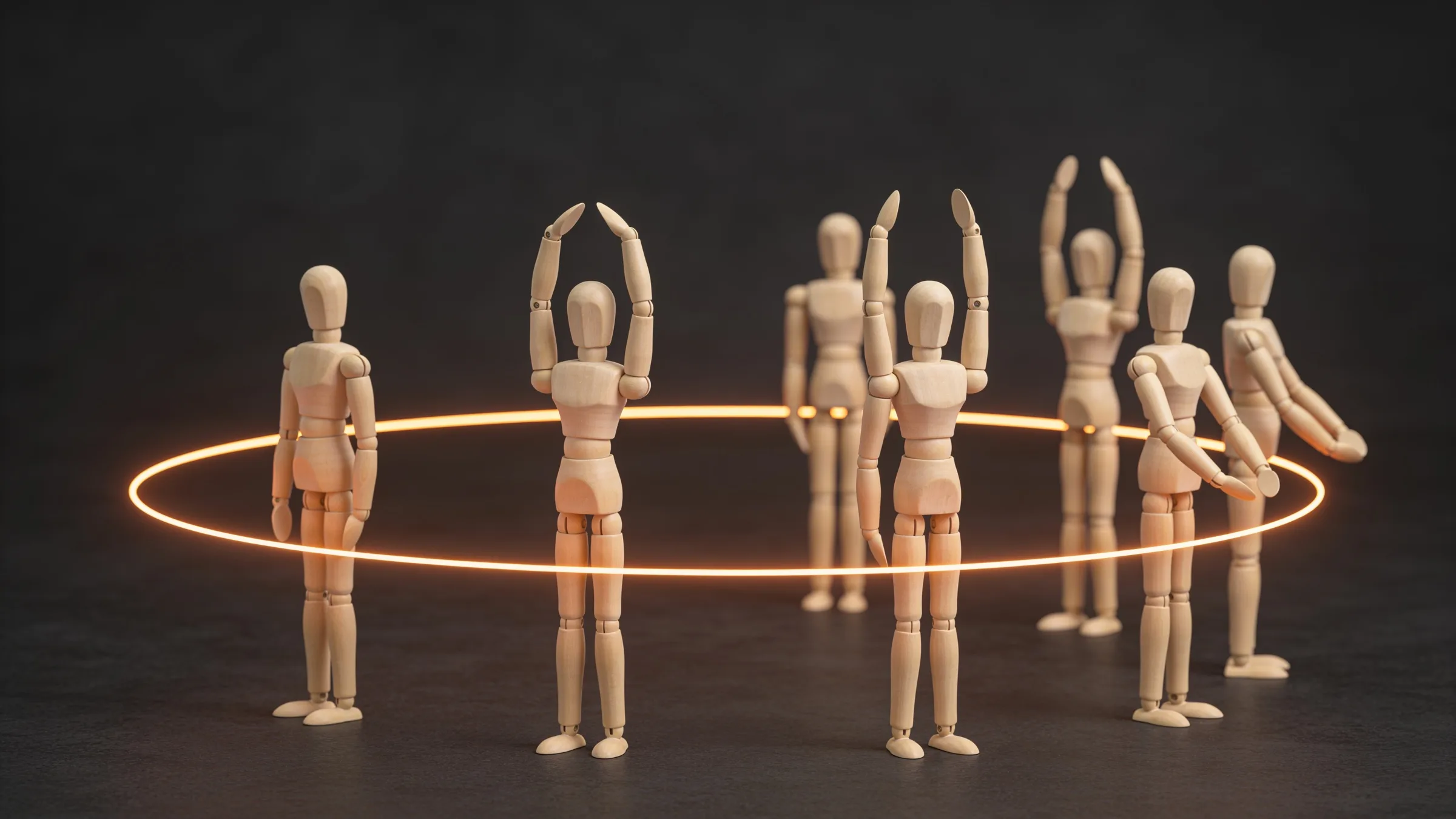
A single animation clip is easy to judge on its own: play it, and it either looks right or it doesn't. The harder part is what happens between clips. A character waits, checks a watch, yawns, puts their hands on their hips and stays there for as long as the scene needs. Each change is a seam, and every seam is a place where the body can jump, a hand can slide through a hip, or a loop can hitch once every few seconds. This post explains how we build our humanoid clip packs so those seams don't show, and what we learned doing it across our Body Actions, Emotes & Social and Everyday Idles & Waiting packs.
One shared idle for every clip
The simplest rule does most of the work. Every standalone clip in those three packs starts and ends on the same standing idle pose: the same hips, spine, shoulders, arms and hands, frame for frame. That gives you a single place to join from and return to. A wave can follow a yawn, a door push can follow a shrug, and none of them needs a blend to hide a jump, because there is no jump to hide.
It sounds obvious, but small things quietly break it. Two that caught us:
- A key past the last frame. If a curve has a key one frame beyond the end of the clip, the exported last frame is an in-between, not the idle. It looks fine in the editor timeline and pops in the game.
- Secondary motion that never stops. Breathing and small finger movement make a clip feel alive, but if they are still moving on the last frame, the clip ends a few millimetres off the idle. We now fade those layers to zero over the last ten frames, so the final pose is exactly the shared one.
We check the first and last frame of every clip against the idle before a pack ships, not just by eye.
Start, Loop, End: holding a pose as long as you like
Some actions are really states: hands on hips while supervising, a hand at the chin while thinking. A single fixed-length clip can't cover "as long as the player stands there", so these come as three clips:
- Start goes from the idle into the pose and ends on the first frame of the loop.
- Loop holds the pose with life in it (weight shifts, head turns) and its last frame matches its first.
- End leaves the loop and lands back on the idle.
In Everyday Idles, Hands On Hips and Thinking Chin both work this way: idle, Start, Loop as many times as you need, End, idle. Because the joins are frame-exact, you can drive them from a simple state machine without crossfades, or use short crossfades if your engine prefers them; either way nothing pops.
Loops have their own trap. A loop can match on position at the seam and still hitch, because the motion arrives at the last frame moving one way and leaves the first frame moving another. When we made the first and last frame of our talk loop exactly the shared idle, rather than "close to it", the jump in speed at the seam dropped to about a third. Matching the pose is necessary; matching how the body moves through it is what makes a loop invisible.
Hands that stay on the body
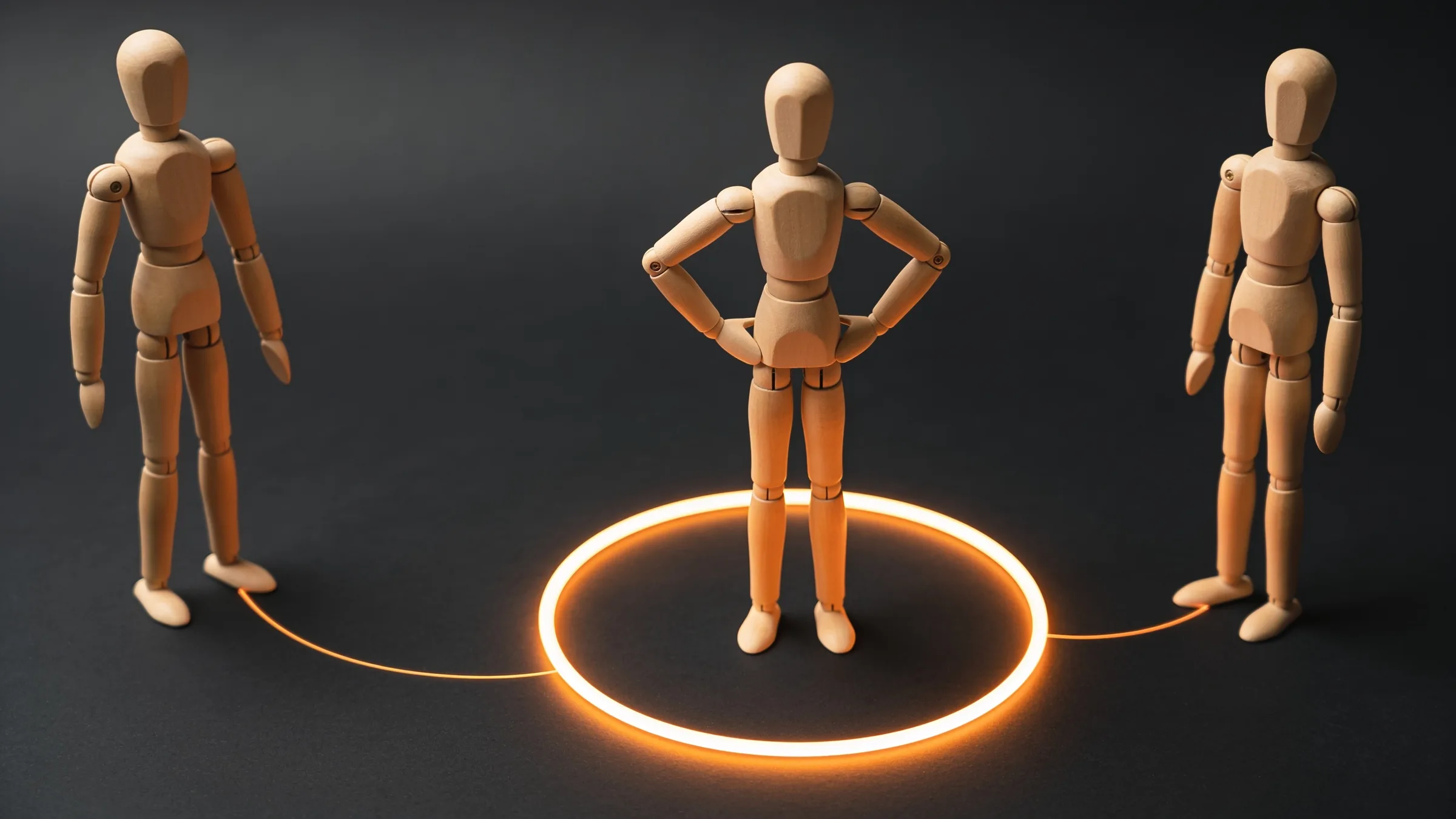
Hands are where most clip packs fall apart, and they were where most of our fixes went. A hand that should rest on a hip, a chin or the back of the neck has to stay on the skin through the whole move, including while the rest of the body sways.
Three lessons from our own clips:
- Hand shapes drift between keys. If a hand shape is set at one key and not set again until a much later key, the animation curves blend it slowly across the whole gap. In a clap, the thumb drifted about 2.7 cm over five claps; in a facepalm, the fingers slowly sank into the face. The fix is to key the hand shape again at the last frame it should hold.
- A hand on the head must move with the head. If the head nods while a hand rests on the brow, a hand keyed in world space slides through the face. Placing the hand relative to the head on every frame, and holding it a few millimetres off the skin, keeps the contact believable.
- Check contact on every frame, not one. A hand can look right on the key and pass through the body halfway between keys. We measure how far every hand sits from the skin on the contact frames. For Everyday Idles the listing publishes those distances: every contact stays within about 1.7 cm of the skin.
Some poses are worth avoiding altogether. A palm pressed flat on a seat to brace needs about 90 degrees of wrist bend on our rig, which looks strained, so we avoid it. And hands resting on the thighs while the legs swing into a seat read as a "chicken wing" elbow; letting the arms hang by the hips during the swing and then arcing the hands onto the thighs fixes it.
Readable at a distance
Background characters are mostly seen small, in a queue, a bus stop or a town square. That changes what "good" means. Our first big two-handed wave swung only the forearms, about 12 cm, in identical cycles: correct, but small from a distance and mechanical up close. Driving it from the shoulders, with the chest leaning in, the head following, the hips shifting against it and cycles of slightly different lengths, made it read as a wave from far away and as a person up close.
The same idea applies to idles. The quietest moves are the hardest to sell: a small shoulder or neck movement can be anatomically right and still hard to notice at game distance. When you mix idles into a crowd, the bigger moves (a stretch, a yawn, a check of the watch) do more work per second of screen time, and the small ones fill the gaps.
Contacts and objects in the world
Clips that touch the world have to agree with the world's geometry. In Body Actions, the clip that pulls a car door shut reaches the door at about 42 degrees open, because a seated person can't reach a door swung wide open. A pull-open on a building door is a second long so the person ends clear of the swinging door. Each clip's length is published on the listing, along with its marks: named moments in seconds, such as the instant a hand meets a handle, which your game can use to sync sounds or move the prop.
Use the marks
Our clip packs ship marks in each clip's GLB (Body Actions and Everyday Idles also include marks.json): the sigh, each toe tap, the moment a hand meets a door. Hooking a footstep or cloth sound to a mark is far more reliable than guessing a frame number.
What this means for you
Whether you use our clips, make your own or buy them elsewhere, the same checks will save you time:
- Pick one rest pose and hold every clip to it. Compare the first and last frame of each clip numerically, not just visually.
- Split holdable actions into Start, Loop and End. It makes state machines simpler and removes most blend tuning.
- Fade secondary motion out before the last frame, and delete stray keys beyond the clip range before exporting.
- Re-key hand shapes where they should hold, and check hand contact on every frame of the contact, not only on the keys.
- Judge background clips at the distance players will see them. Drive gestures from the shoulders and hips, and vary cycle lengths.
- Decide root motion or in place early. Everyday Idles includes both versions of every clip; our guide on root motion vs in-place animation explains which to use in Unity, Unreal and Godot.
All of our humanoid clips share one skeleton, so they play on the Rigged Mannequin, Loom Avatars builds and our character sets, and can be retargeted to your own characters; the retargeting guide covers Unity, Unreal Engine 5 and Godot. If you build characters in AssetLoom Studio, the getting started guide is the place to begin.
Spotted a mistake or have a question? Email support@assetloom.io.
More from the blog
All posts
AI & industry
Unreal Engine 5.9 Preview puts AI agents in the editor: what game developers should know
Epic's Unreal Engine 5.9 MegaJam Preview adds editor AI agents, Unreal Canvas for generated meshes and AI animation. What shipped and what to check.
, 6 min read

AI & industry
Half of October's new Steam games disclosed AI content: what Steam asks and how to be ready
49.9% of October 2026's new Steam games disclosed AI content. What Steam's AI disclosure asks, what Valve said, and how to keep a provenance record.
, 6 min read

Behind the build
How we built a modular mine kit whose rock tunnels join without cracks
One shared tunnel profile, rock carved only into the walls and ends that match at every level of detail: how we built the Modular Mine Shaft Kit.
, 5 min read